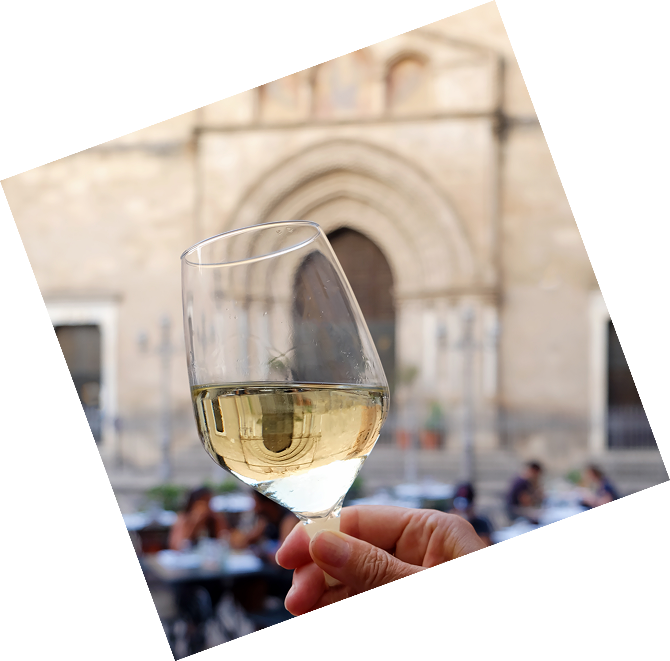
THE TERRITORY OF SICILIA DOC
Sicily
Sicily is the largest island in the Mediterranean Sea, with an area of 25,460 km². The region also includes islands and archipelagos such as the Aeolian Islands, Ustica, the Egadi Islands, the Pelagie Islands, Pantelleria and Lampedusa. The territory of Sicilia DOC spans the entire island encompassing coastal, hilly and mountainous areas.
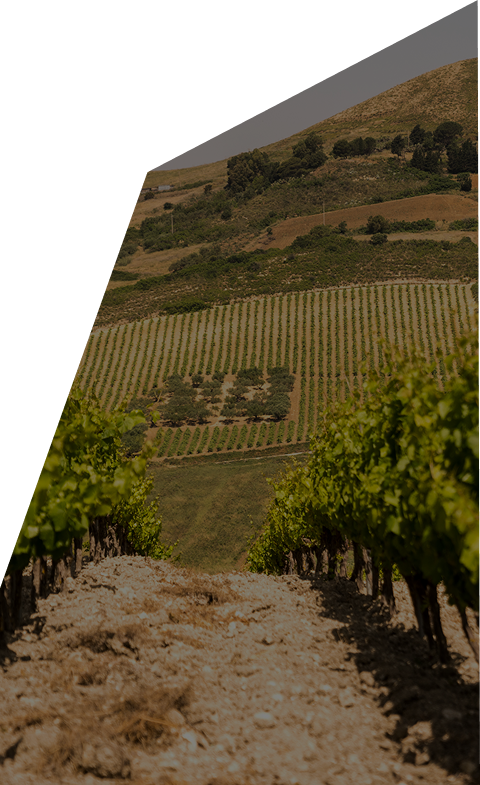
Unique geographical features
Sicily is the largest island in the Mediterranean Sea, with an area of 25,460 km². The region also includes islands and archipelagos such as the Aeolian Islands, Ustica, the Egadi Islands, the Pelagie Islands and Pantelleria. The territory of the Sicilia DOC denomination spans the entire island encompassing coastal, hilly and mountainous areas
Biodiversity and agricultural identity
Sicily is one of the regions in Italy with the largest extension of vineyards and extraordinary viticultural biodiversity. It is where more than 70 native varieties are cultivated, many of which are unique and closely linked to the local microclimates and soils.
The connection between grape variety and territory is crucial: every Sicilia DOC wine has its own story to tell, a story that begins in the vineyard and is ultimately expressed in the glass.

An extraordinarily complex geological structure
The morphology and composition of Sicily’s soils are the result of complex geological and tectonic processes. The island is characterised by three main categories of soil
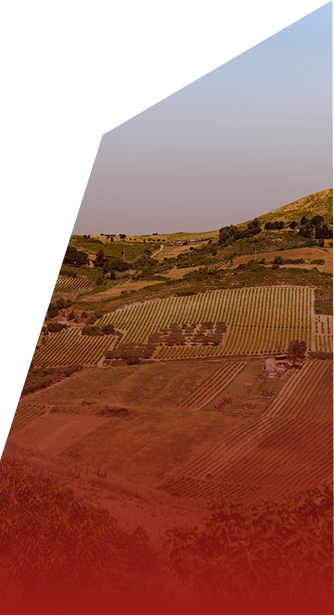

la vite in Sicilia, dai Fenici a Roma
The oldest traces of human life found on the island are believed to date back to the thirteenth millennium BC, with some findings in the hinterland of Syracuse and the Niscemi cave in Palermo.
The Phoenicians, who were able merchants and sailors, introduced vines to Sicily, although wild vines were already part of the spontaneous flora. The Phoenicians sold Sicilian wine, most probably sweet wine made from overripe grapes, throughout the Mediterranean.
Sicilia entered the historical era with the Greek colonisation, which began with the foundation of Naxos and Syracuse in the middle of the eighth century BC; many other cities were subsequently founded by the Greeks, but also by the Carthaginians, such as Zyz, Mothya and Solunto and the Elymians, such as Eryx and Segesta.
Thanks to the Greeks (eighth century BC), vine cultivation became more widespread and with the introduction of the Aegean bush vine, the Sicilians acquired expert knowledge in vine cultivation techniques. The presence of vine cultivation was first mentioned in Europe in the passages of the Odyssey dedicated to the Island of the Cyclops, identified in the Aegadian archipelago.
The Roman Republic and Imperial Rome were quick to appreciate the quality of Sicilian wine: Julius Caesar was known to have a fondness for Mamertino, produced in the Messina area, whilst Pliny the Elder, famous for his expertise in the field, preferred white Taormina, made from the ancient Catarratto bianco, Carricante, Inzolia and Minnella bianca grapes.
Later periods were influenced by a succession of different cultures, resulting in the development of viticulture on the island in alternating stages: from the Byzantines to the Muslims, who eliminated the production of wine, through to the Normans, who managed to eradicate farmers as a result of excessive taxation. Finally, the Aragonese and the Spanish put agriculture and vine cultivation back on the road to development.
Subsequently, the great voyages embarked upon by the English fleets during the Napoleonic period supported the rise of wine making in the area of Marsala, which was sold by an English man named Mr Woodhouse.
The most recent history tells of a winemaking tradition that survived the economic crisis caused by Phylloxera, which was widespread around the year of 1880, moving forward to establish its position as one of the leading winemaking regions in Italy thanks to research and experimentation with new production models.
Sicily is now home to numerous wineries that in recent years, thanks to the discovery of old and new vines, as well as the tenacity and imagination of the companies involved, have achieved results that have attracted the attention of many Italian and international entrepreneurs. Sicily is now able to offer a vast range of wines, suitable for any occasion and for all tastes.